

An employee asks about medical leave. A manager needs to address a performance issue. Someone raises a complaint about a coworker.
The next step isn't always obvious.
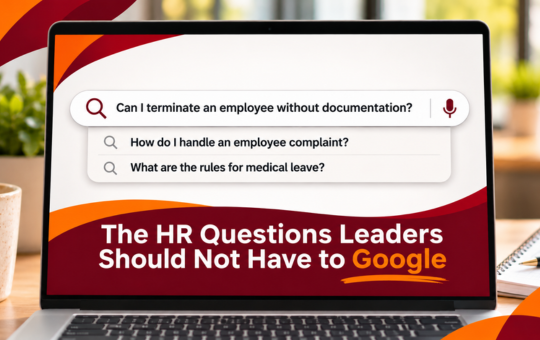
So, what happens? Someone opens Google.
A quick search may provide a general answer. But it doesn't know your employees, company policies, or the details of the situation. It may not even reflect the employment laws that apply to your organization.
When people decisions carry real consequences, a search result shouldn't be your only source of guidance.
Leaders don't need to know every HR answer. They need to know where to turn when the answer matters.
Not Every HR Question Has a Simple Answer
Some HR questions are straightforward. Others become complicated once you consider the circumstances.
For example, an employee requests medical leave. The manager wants to be supportive but doesn't know which requirements apply.
Or an employee raises a concern about unfair treatment. Should the manager handle it or involve HR?
These situations call for more than generic advice.
Company policies, employment laws, documentation, and individual circumstances can all affect the next step.
Reliable HR guidance helps leaders understand those factors before making a decision.
The Cost of Guessing Can Be Higher Than the Cost of Asking
When leaders are busy, making a quick decision can feel easier than seeking guidance.
But guessing can create problems that take much longer to resolve.
A concern may go undocumented. A leave request may be handled incorrectly. A manager may take disciplinary action without reviewing the full situation.
Even well-intended decisions can create compliance concerns, damage trust, or lead to inconsistent treatment.
Before acting, leaders should ask:
- Do I have all the facts?
- Does company policy address this situation?
- Are there legal requirements to consider?
- What should I document?
- Would HR guidance help determine the next step?
A few thoughtful questions can prevent bigger problems.
Managers Should Not Have to Be HR Experts
Managers already have plenty of responsibilities.
They lead teams, manage performance, support employees, and help the business meet its goals.
Yet they're often expected to handle complicated HR situations without much preparation.
A manager may be comfortable coaching an employee but unsure how to respond to an accommodation request. Another may handle daily performance issues well but have little experience with formal employee complaints.
That doesn't make them ineffective managers.
It means they need access to the right expertise.
The goal isn't to turn every manager into an HR professional. It's to give managers the support they need to lead well.
Employee Relations Need More Than a Search Result
Employee relations issues are rarely as simple as they first appear.
Consider these situations:
- An employee reports inappropriate behavior but asks the manager not to tell anyone.
- Two employees describe the same workplace conflict differently.
- A manager wants to terminate an employee but isn't sure the documentation is sufficient.
Each situation requires care and judgment.
Leaders need to gather facts, document concerns, protect sensitive information, and determine who should be involved.
They also need to recognize when further review or investigation may be necessary.
An online article may explain general practices. However, it cannot evaluate the full situation.
Experienced HR guidance helps organizations respond thoughtfully while considering employee needs and business risk.
Timely HR Guidance Keeps Problems from Growing
Sometimes the biggest problem isn't the original concern. It's how long the organization waits to respond.
A manager delays a difficult conversation. An employee waits for an answer about leave. A complaint goes unresolved because no one knows who should handle it.
Meanwhile, uncertainty grows.
Timely HR guidance helps leaders respond earlier and make informed decisions.
It also supports consistency across departments. Instead of each manager interpreting policies independently, leaders have a reliable resource for guidance.
That means fewer delays, clearer communication, and better follow-through.
Employees benefit, too. They deserve to know their concerns will receive appropriate attention.
Better HR Support Lets Leaders Focus on Leading
Business leaders shouldn't spend hours searching for answers to every HR question.
They have teams to develop, customers to serve, and business goals to achieve.
Access to experienced HR professionals gives them a practical resource when unfamiliar or sensitive situations arise.
Managers gain confidence. Employees receive more consistent support. Leaders can address concerns earlier and better understand potential risks.
HR guidance isn't only about solving today's problem. It helps organizations make better people decisions over time.
Get Real HR Answers from Real People
When an HR question comes up, you shouldn't have to figure everything out on your own.
The trueU HR Help Desk connects business leaders and managers with experienced HR professionals who provide practical guidance on employment laws, policies, employee relations, and workplace concerns.
No bots. No complicated phone trees. Just real people who understand the challenges leaders face.
Most questions are resolved immediately. When further research is needed, trueU provides a personalized response within 24 hours.
Spend less time searching for HR answers and more time leading your people.
Connect with trueU's HR Help Desk to learn how experienced HR support can help protect your people, reduce risk, and move your business forward.
