


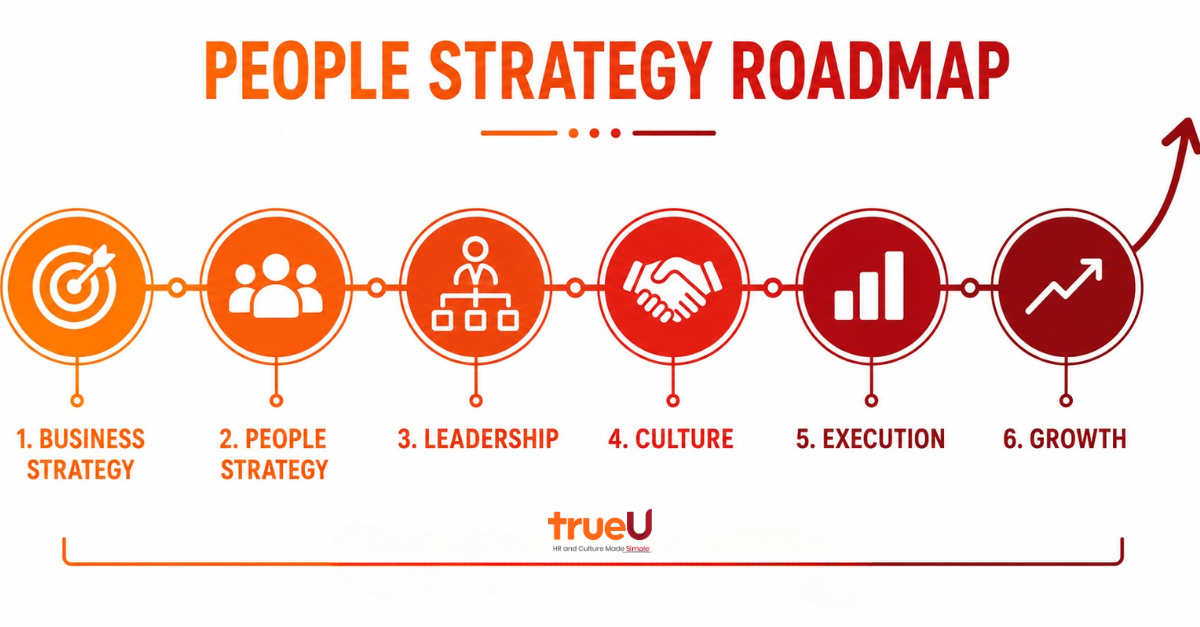
Every organization has goals.
Growth goals. Revenue goals. Hiring goals. Culture goals. Operational goals.
But there is one question leaders often miss:
Is your people strategy strong enough to support your business strategy?
A clear business plan matters. However, the plan only works when the right people, roles, leaders, and systems are in place.
Without that alignment, progress gets harder.
Roles become unclear. Managers feel stretched. Hiring turns reactive. Culture starts to drift. Employees may feel the gap before leaders see it.
That is why people strategy cannot stay in an HR-only lane. It needs to be part of the larger business conversation.
When people strategy and business strategy work together, the organization moves with more clarity. When they fall out of sync, even strong plans can lose momentum.
People Strategy Is More Than an HR Plan
People strategy is not only about hiring, policies, benefits, or compliance.
Those areas matter. But they are only part of the picture.
A strong people strategy connects your talent, leadership, communication, culture, performance, and team structure to the goals of the business.
It helps leaders answer important questions:
- Do we have the right people in the right roles?
- Are our managers ready to lead through growth and change?
- Do employees understand expectations and priorities?
- Does our culture support where the business is going?
- Are we building future talent, or only reacting to current gaps?
These are not just HR questions. They are business questions.
When leaders treat people strategy as a business priority, they make better decisions. They also build a stronger foundation for growth.
Warning Sign #1: Your Team Structure No Longer Matches Your Goals
One clear warning sign is a team structure that no longer supports the business.
This often happens as companies grow.
Roles may become unclear. Leaders may carry too much. Employees may not know who owns what. Teams may repeat work. Decisions may take too long.
In some cases, the org chart exists, but it does not reflect how work actually gets done.
That creates friction.
Your business strategy may call for faster execution, stronger client service, new markets, or expanded services. However, if your team structure does not support those goals, the strategy becomes harder to deliver.
A strong people strategy helps leaders review the structure before it slows progress.
Warning Sign #2: Hiring Feels Reactive Instead of Strategic
Hiring often reveals people strategy gaps.
If your organization only hires when someone leaves, when a team is overwhelmed, or when the pain becomes urgent, hiring has become reactive.
That approach can create problems.
Reactive hiring often leads to rushed decisions, unclear roles, poor fit, and inconsistent onboarding. Over time, it can hurt performance, retention, and culture.
Strategic hiring works differently.
It connects talent needs to business goals. It looks at the skills, roles, and leadership capacity the organization will need next.
It does not only ask, “Who do we need right now?”
It also asks, “Who will we need to grow well?”
A stronger people strategy connects workforce planning, recruiting, onboarding, development, and retention into one clear plan.
Warning Sign #3: Managers Are Carrying the Strategy Without Enough Support
Managers play a critical role in business execution.
They turn goals into daily priorities. They explain expectations. They coach employees. They manage performance. They shape culture through everyday conversations.
However, many managers are asked to do more without enough training, clarity, or support.
As a result, the employee experience becomes inconsistent.
One team may receive clear communication. Another may not. One manager may address performance early. Another may avoid the conversation. One department may feel aligned. Another may feel uncertain.
These differences matter.
When managers lack support, performance issues can linger. Accountability may feel uneven. Engagement may drop. Strong employees may grow frustrated.
If your business strategy depends on people executing well, manager effectiveness matters.
A people strategy that keeps up with the business includes leadership development, manager training, clear expectations, and consistent tools for leading teams.
Warning Sign #4: Retention, Culture, and Performance Feel Disconnected
Another warning sign is when people priorities feel separate from each other.
Hiring happens in one lane. Retention happens in another. Culture becomes a separate conversation. Performance management turns into an annual task. Leadership development only happens after a problem appears.
However, these areas should work together.
The way you hire affects culture. The way managers lead affects retention. The way leaders communicate expectations affects performance. The way employees grow affects engagement and long-term commitment.
When these areas feel disconnected, employees notice.
Leaders may also start seeing the same problems repeat. Turnover may rise. Communication may weaken. Performance may become inconsistent. Culture may feel harder to protect.
A strong people strategy creates alignment. It helps hiring, retention, culture, performance, and leadership practices support the same business goals.
Warning Sign #5: People Issues Are Slowing Execution
The clearest warning sign is when people issues begin slowing down the business.
This may look like:
- Delayed decisions
- Unclear accountability
- Rising turnover
- Manager burnout
- Communication breakdowns
- Confusion around priorities
- Performance issues that go unresolved
At first, these problems may seem separate.
However, they often point to a deeper issue. The business may be moving in one direction while the people systems are still built for an earlier stage.
That gap creates drag.
When people strategy and business strategy align, execution becomes smoother. Leaders make better decisions. Managers lead with more clarity. Employees understand what matters most.
As a result, the organization can move forward with less friction.
Stronger Alignment Creates Stronger Momentum
People strategy should evolve as the business evolves.
If your organization is growing, changing, or preparing for what comes next, review the people systems that support the plan.
Look at your team structure. Review your hiring practices. Evaluate manager support. Assess retention, communication, culture, and performance expectations.
Business strategy answers where the organization is going.
People strategy answers whether the organization has the talent, leadership, structure, and culture to get there.
Both need to move together.
Ready to Align Your People Strategy with Your Business Strategy?
trueU helps organizations strengthen the connection between people strategy and business growth. From HR operations and TalentDNA™ to leadership development and culture support, trueU helps leaders build people systems that support where the business is going next.
If your business strategy has evolved, your people strategy should evolve with it.
Connect with trueU to start the conversation.
