


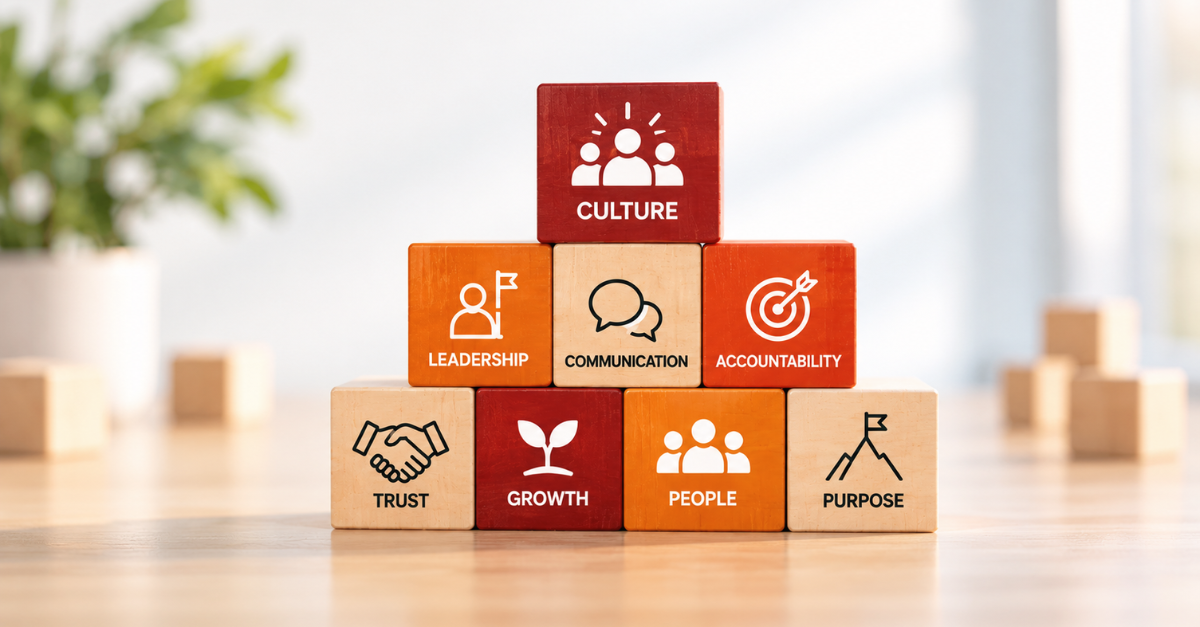
Culture is easier to feel when an organization is small.
People know each other. Leaders are close to the work. Communication is more direct. Decisions happen faster. Expectations may not always be written down, but people usually understand how things work.
Then the business grows.
New people join. Teams expand. More managers get involved. Communication takes more effort. Decisions move through more layers. The culture that once felt natural can start to feel inconsistent.
That does not mean the culture is broken.
It means the culture needs more intention.
Culture does not scale by accident. It scales when leaders define what matters, model it consistently, and build it into the way the organization works.
Growth Makes Culture Harder to Protect
In a smaller organization, culture often spreads through proximity.
Employees learn by watching leaders. They hear how decisions are made. They see what gets rewarded. They know which behaviors are accepted and which are not.
But as the organization grows, that informal system becomes harder to maintain.
A leader cannot be in every conversation. A founder cannot explain every decision. A senior team cannot personally shape every employee experience.
As a result, culture can start to vary from team to team.
One manager communicates clearly. Another does not. One team feels connected to the mission. Another feels left out. One department has strong accountability. Another avoids hard conversations.
Growth makes those differences more visible.
That is why culture needs structure. Not stiff rules. Not forced activities. Structure that helps people understand what the organization values and how those values show up in daily work.
Good Intentions Are Not a Culture Strategy
Most leaders care about culture.
They want people to feel valued. They want strong teams. They want trust, communication, and accountability. They want employees to do great work and stay engaged.
But good intentions do not always create consistent experiences.
A company may say it values communication, but employees may still feel uninformed. It may value accountability, but poor performance may go unaddressed. It may value growth, but employees may not see a path forward.
That gap matters.
Culture is not only what leaders believe. It is what employees experience.
A strong culture strategy connects values to behaviors. It helps leaders clarify what should be practiced, repeated, recognized, and corrected.
For example, if accountability matters, managers need a shared understanding of what accountability looks like. If development matters, employees need real opportunities to grow. If communication matters, leaders need rhythms that keep people informed.
Intentional culture turns ideas into habits.
Employees Experience Culture Through Their Managers
Managers play a major role in whether culture scales well.
Employees do not experience culture only through company values, town halls, or leadership messages. They experience it through the person they report to most often.
That manager shapes communication.
That manager sets expectations.
That manager gives feedback.
That manager handles conflict.
That manager decides what gets addressed and what gets ignored.
Because of this, manager consistency matters.
If leaders across the organization operate with different standards, employees will have very different experiences. Some may feel supported and clear. Others may feel confused, overlooked, or unsure what matters.
This is where culture and leadership connect.
A scalable culture needs managers who understand how the organization expects leaders to lead. They need practical tools, shared language, and clear expectations.
Without that, culture depends too much on individual leadership style.
With it, employees are more likely to experience the same core values no matter which team they are on.
A Scalable Culture Needs Shared Leadership Expectations
As organizations grow, leaders need alignment around more than goals.
They also need alignment around how people are led.
What does good communication look like here?
How do we handle feedback?
How do we make decisions?
How do we address conflict?
How do we recognize strong performance?
How do we hold people accountable?
These questions shape culture every day.
When leaders answer them differently, culture becomes uneven. Employees may receive mixed messages. Managers may feel unsure. Teams may work against each other without meaning to.
Shared leadership expectations help reduce that confusion.
They give leaders a common foundation. They help managers lead with more clarity. They help employees know what to expect.
This does not mean every leader has to sound the same. Personality still matters. Leadership style still matters.
But the core expectations should be consistent.
A healthy culture gives leaders room to be human while still creating alignment across the organization.
Culture Should Connect to the Business Strategy
Culture is not separate from business performance.
It shapes how people work together, solve problems, serve clients, make decisions, and stay committed during change.
If the business strategy requires innovation, the culture needs to support curiosity and smart risk-taking. If the strategy requires growth, the culture needs trust, accountability, and leadership capacity. If the strategy requires high client service, the culture needs communication, ownership, and follow-through.
Culture either supports the strategy or slows it down.
That is why culture should be part of the business conversation.
Leaders should ask:
Does our culture support where we are going?
Are our values showing up in daily behavior?
Do managers know how to reinforce the culture?
Are we rewarding the behaviors we say matter?
Are we addressing the behaviors that work against our goals?
These questions help leaders move culture from a general idea to a practical business tool.
Build Culture Before Pressure Tests It
Culture is tested when things get difficult.
Growth creates pressure. Turnover creates pressure. Leadership change creates pressure. Conflict creates pressure. Busy seasons create pressure.
In those moments, the real culture becomes visible.
Do people communicate clearly?
Do leaders address issues directly?
Do managers stay consistent?
Do teams protect trust?
Do people know what matters most?
The best time to strengthen culture is before those moments arrive.
That means building culture into hiring, onboarding, leadership development, communication, recognition, feedback, and performance conversations.
It also means giving leaders the tools and support to carry culture consistently.
A strong culture does not remove pressure from the business. But it helps the organization respond to pressure with more clarity and alignment.
Final Thought: Culture Needs Intention to Grow
Culture will grow as the business grows.
The question is whether it will grow with intention.
If leaders do not shape it, culture will still form. It may form around habits, assumptions, personalities, or pressure. That version may not support the business you are trying to build.
A scalable culture is different.
It is clear. It is practiced. It is led. It connects people to purpose, expectations, and results.
Culture does not scale by accident.
It scales when leaders build it on purpose.
Ready to Build a Culture That Can Scale?
trueU helps organizations build strong, sustainable cultures that support people and business results. Through Culture Community, Leadership Academy, Talent Strategy, and HR Operations, trueU helps leaders connect culture to the way people lead, work, and grow together.
If your organization is growing, changing, or feeling the strain of an inconsistent culture, now is the time to be intentional.
Connect with trueU to start building a culture that can scale.
