


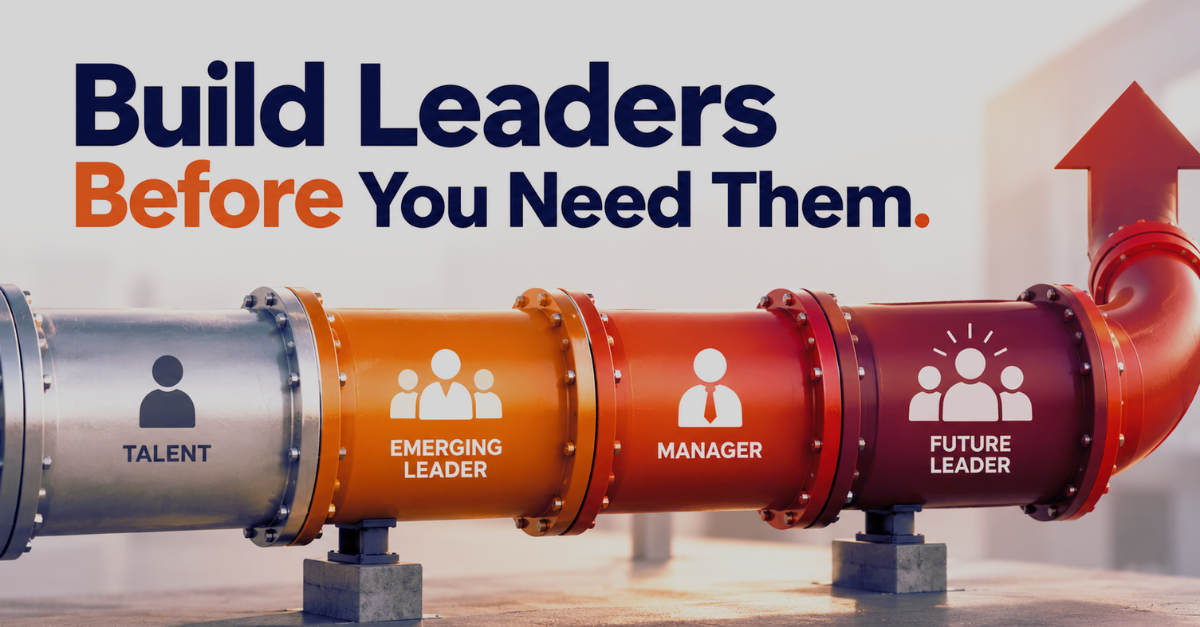
Leadership gaps rarely happen at a convenient time.
A manager leaves. A team grows faster than expected. A high performer gets promoted before they are ready. A senior leader becomes the person everyone depends on for every decision. A key role opens, and no one is prepared to step in.
By then, the organization is already reacting.
That is why building a leadership pipeline matters. It gives the business a stronger way to identify, develop, and prepare future leaders before the need becomes urgent.
A leadership pipeline is not just about succession planning. It is about business readiness.
If your organization has growth goals, it also needs a plan for the people who will help lead that growth.
A Leadership Pipeline Should Be Part of the Business Plan
Most companies plan for revenue, operations, sales, staffing, and growth. Fewer spend enough time asking who will lead the work.
That creates a gap.
As the business grows, leadership needs grow with it. Teams get larger. Roles become more complex. Managers carry more responsibility. Employees need clearer communication, better coaching, and more consistent accountability.
Without prepared leaders, growth can start to strain the same few people.
A strong leadership pipeline connects directly to the business plan. It helps leaders think ahead and ask better questions.
Who will lead future teams?
Who has the potential to take on more responsibility?
Where are we too dependent on one person?
What leadership skills will the business need next?
These are not just HR questions. They are business questions.
When leadership development connects to strategy, the organization can prepare for growth instead of reacting to gaps.
High Performers Are Not Automatically Ready to Lead
Many organizations look to their strongest individual contributors when a leadership role opens.
That makes sense. High performers are often dependable, knowledgeable, and respected by the team.
But being great at the work is not the same as being ready to lead people.
Leadership requires a different skill set. Future leaders need to learn how to communicate expectations, coach performance, give feedback, handle conflict, make decisions, and build trust.
They also need to shift their mindset.
As an individual contributor, success often comes from doing the work well. As a leader, success comes from helping others do the work well.
That transition can be difficult without preparation.
When high performers are promoted before they are ready, the organization may create new problems. The new manager may feel overwhelmed. The team may lose clarity. Feedback may be delayed. Accountability may become inconsistent.
This does not mean high performers cannot become strong leaders. Many can.
But they need development before the title changes.
Internal Development Supports Retention
A leadership pipeline is also a retention strategy.
Strong employees want to know they have a future. They want to see opportunities to grow, contribute, and take on meaningful challenges.
If they cannot see that path inside the organization, they may start looking elsewhere.
Internal development sends a different message.
It tells employees that the organization is paying attention. It shows that growth is possible. It gives people a reason to stay engaged and invested.
This does not mean every strong employee needs to become a people manager.
Some may grow as project leaders. Some may become mentors. Some may lead through influence. Others may become future managers, supervisors, or senior leaders.
The key is knowing who has potential, what kind of growth fits them, and how to support their development.
When organizations build talent from within, they protect knowledge, strengthen culture, and give employees a clearer reason to stay.
Succession Planning Should Go Beyond Senior Leadership
Succession planning often focuses on executive roles.
That matters. Senior leadership transitions can create major risk.
But leadership gaps do not only happen at the top.
A frontline supervisor leaves.
A department manager burns out.
A project lead moves on.
A team lead gets promoted without support.
A key relationship holder exits the business.
Each of these moments can slow momentum.
A strong leadership pipeline looks across the organization. It considers where leadership capacity is needed now and where it will be needed next.
That includes managers, supervisors, team leads, emerging leaders, and employees who influence others even without a formal title.
Sometimes future leaders are already showing signs.
They take ownership. They communicate well under pressure. They help teammates solve problems. They ask thoughtful questions. They care about the success of the team, not just their own work.
Those are the people worth noticing early.
Emerging Leaders Need Practice Before Promotion
Leadership cannot be developed only through conversation.
Future leaders need practice.
They need opportunities to lead projects, facilitate meetings, mentor teammates, solve problems, communicate expectations, and receive feedback.
Practice gives emerging leaders room to grow before the stakes are higher.
It also gives the organization better insight. A person may show strong leadership potential once given the chance. Another may need more support. Someone else may realize they prefer a different growth path.
That information is valuable.
It helps leaders make better development and promotion decisions.
Without practice, leadership potential remains a guess. With practice, the organization can build readiness more intentionally.
This is where structured leadership development matters. It gives emerging leaders a place to build confidence, strengthen self-awareness, and develop the practical skills they will need before stepping into a larger role.
The Best Time to Develop Leaders Is Before the Role Opens
Many companies wait too long to develop future leaders.
They start when a manager resigns.
They start when a team is already struggling.
They start when a promotion becomes urgent.
They start when growth creates a role no one is ready to fill.
At that point, there may be fewer options.
Developing leaders earlier gives the business more flexibility. It creates smoother transitions. It reduces the risk of rushed promotions. It helps managers lead with more confidence and gives employees a stronger experience.
The best leadership pipelines are built before the pressure hits.
That starts with a simple question:
Who on your team today could become the leader your organization needs tomorrow?
The answer may not be obvious right away. But it is worth exploring.
Because if your business is growing, your need for capable leaders will grow with it.
Ready to Build the Leaders Your Business Will Need Next?
Your organization does not need to wait for a vacancy to start developing future leaders.
trueU helps organizations prepare emerging leaders before the next leadership gap becomes urgent. Through Leader in Training, organizations can give rising leaders the tools, confidence, and practical experience they need to lead themselves and others well.
If your business is growing, changing, or preparing for what comes next, now is the time to look at your leadership pipeline.
Who is ready now?
Who has potential?
Who needs development before the next opportunity opens?
Connect with trueU to start building the leaders your organization will need next.
